Featured Videos

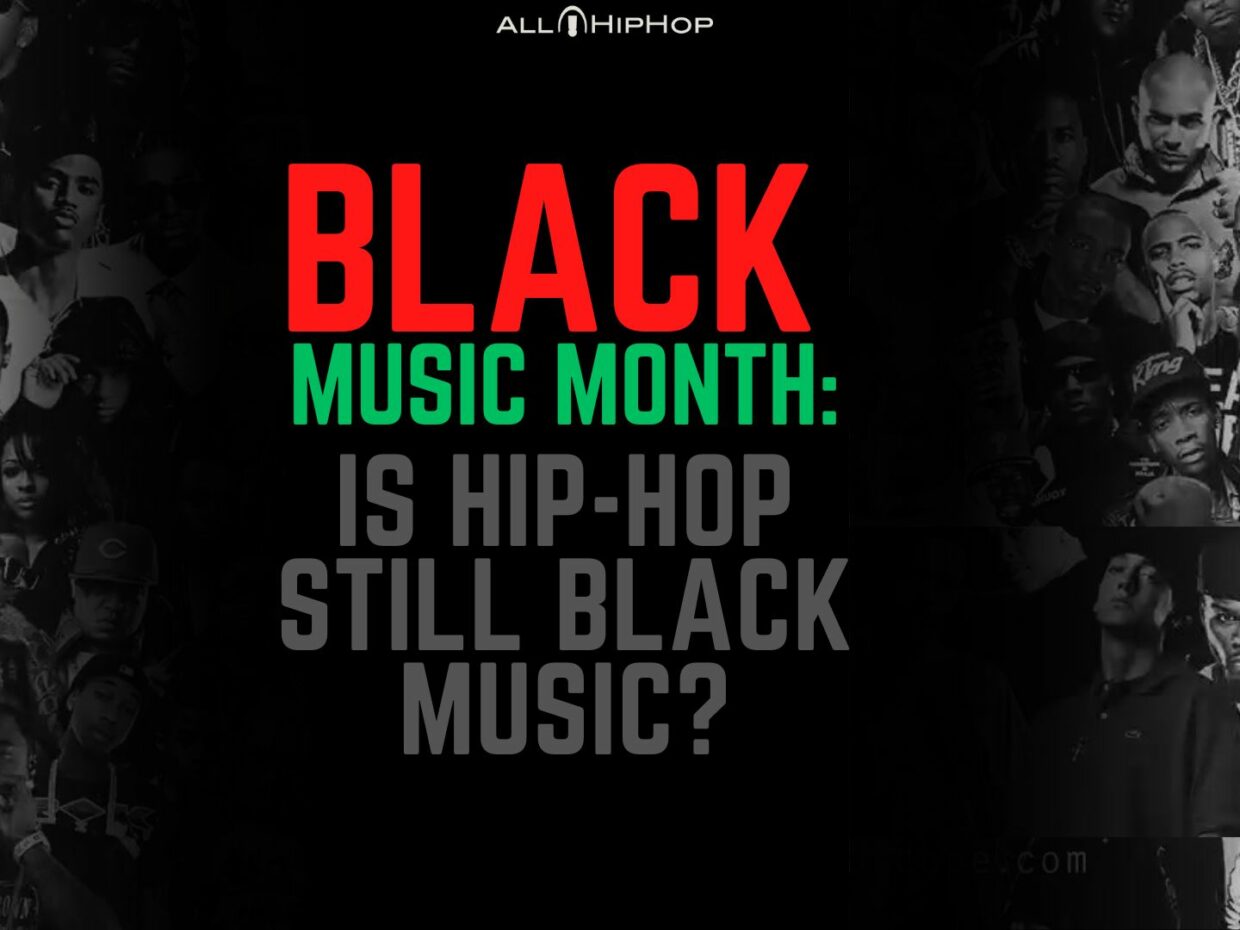
Black Music Month: Is Hip-Hop Still Considered Black Music?

It’s Black Music Month, the month many take upon themselves to delve deeper into the founders of the music itself, inspiration for their creation and contemporaneous reality of record label politics.  It’s within this paradigm we find swing, jazz, gospel, blues, R&B, country music, Hip-Hop, Rock & Roll, house music, techno and all manner of soulful utterances of Black folk within the American sphere and worldwide. The question “is Hip-Hop music still considered Black music” can be a murky one, depending on the person. Historically, the threads of all forms of Black music (i.e., music created by wrongfully enslaved Black people and their descendants) are multifaceted in the sense they’re part storytelling mechanism, part historic record and part act of rebellion against an oppressive system, as well as a source of personal expression. Entertainment was a superficial part, relatively speaking. With each generation there came a new form of genius to interpret the times through music. As alive as the ebony hands that crafted it, the DNA of all forms of black music in America can be found in the music that preceded it. A chronological thread can be tied from Hip-Hop, through Rock & Roll, blues, reggae, gospel, jazz and back to slavery—even to Africa itself when factoring in such things as call and response, heavy drums and storytelling. Within the modern context, Hip-Hop music has changed in many ways compared to its founding in the South Bronx 50 years ago. Economically, it’s grown into a billion-dollar industry. Technically, it’s become easier to create music than ever before. Lyrically? As with beauty, we’ll just leave that to the eye of the beholder.  Most artists will agree that once they create and release music, it’s no longer theirs. It now belongs to the culture—but preferably for a fee. And therein lies the kicker. Cultural expression is defined as pertaining to a particular society, its ideas, customs and art. Although the music performed by a Black person wasn’t recorded and pressed until George W. Johnson was recorded in 1890 as “The Whistling Coon” for his ragtime whistling, African-Americans of his time—as today—were a veritable engine of free or low wage creativity.  From slave calls and chain gangs to fiery preacher orations and funky ’70s gyrations, Black cultural expression is what helped our American ancestors get to the next day, past the last thing and onto the continuation of their existence. That very existence is why we’re here today. We are their tomorrow. Similarly, there would be no Hip-Hop if there were no jazz, blues, rock or reggae. Nor would rock be the same without gospel or blues and vice versa.  Black cultural expression permeates everything in America today because it was commoditized in a manner that promotes a certain version of Black cultural expression; a version that reflects America’s idea of itself. It’s a callous, greedy, uncaring, violent, spiteful, vengeful, petty, abusive and death-seeking cultural expression. These attributes can be found throughout all human societies and in all manner of human expression both historically and contemporaneously. As has always been the case with all forms of Black music in America and the Caribbean, the inspiration for many of Hip-Hop’s best lyricists was the fight against Black pain—the pain of poverty, demonization and marginalization amid the search for dignity in a mad world.  Verily, there are joyful jams, deep flows and those that are eternally inspirational, but you gotta dig for ‘em.  Where the marketing budget goes, so too goes the popularity barring a catastrophic rollout.  Economically, the record industry has reaped most of the profits from music that was spawned from the life experiences of Black people of African descent—by a landslide. The true measure of which has only recently been revealed.  Because the roots of Rock & Roll are found in blues and R&B, it’s infused with ancestral energy. Because blues is filled with elements of swing and ragtime, it’s infused with ancestral energy. And because the drums of plantation life mimicked the rhythm of Africa, they too are infused with ancestral energy.  However, once any artform is shared with the broader society, it becomes part of that broader society. But the legitimacy of the artist is also measured by his or her ability to interpret the language, happenings and realities of Black life into music that reflects that interpretation.  The words and concepts used in rap music have always come from the mouths and experiences of individuals in their teens and 20s. Like nothing before it, rap musicians are held to a level of ageism to an extent that musicians of other genres are not. Outside of JAY-Z, Wu Tang Clan and Snoop Dogg, nobody’s trying to listen to Pop-Pop’s flow. Meanwhile, Jon Bon Jovi, Cher and the Grateful Dead could pack a stadium with only a few hours notice. Capitalism (and racism) alters the landscape due to the nature in which creative expression is monetized. For example, dancers were once essential for any Hip-Hop crew, as well as graffiti artists and DJs.  Fifty years later, the MC is penultimate, with graffiti artists, dancers and turntablists having long since fallen off the rung of importance due to their inability to be monetized by labels. So, the question remains, is Hip-Hop Music still considered Black Music? Why, quite obviously, yes. The fact there are more white rock guitarists playing today than there are Blacks doesn’t change the fact that Sister Rosetta Tharpe was an originator. Tharpe, a gospel singer and guitarist who recorded between 1938 and 1968, is seen by many music historians as the inspiration for Elvis Presley, Little Richard, Chuck Berry, Johnny Cash, Eric Clapton, Jimi Hendrix and many more.   The fact jazz music isn’t dominated by Black musicians today doesn’t erase its beginnings in New Orleans as an amalgamation of swing and ragtime created by Black folk.  Similarly, even though Hip-Hop music is largely controlled by individuals who are not the creators, and even though the majority of Black music is purchased by white Americans, most of its creatives […]

Black Music Month

#TheBusinessBully – 2017 Tech Takeover with Nate Bernadeau

On the Eve of the Donald Trump era, many people are scared. Some are scared of losing jobs, not being able to find jobs, etc. Many fear what a repeal of Obamacare will mean for their lives regarding healthcare. Others are starting or trying to grow their businesses. The one thing that people don’t have enough of is opportunity. One area that is often overlooked and neglected as an opportunity is the area of technology. We live in the digital age where things that were only possible on a cartoon called the Jetsons have become commonplace. Plenty of us use the technology (Smartphones, Tablets, Social Media, Apps, etc), but very few of us (less than 0.05%) are actually manufacturing and developing the technology, Let alone coding it. Nate Bernadeau is a Haitian American who lives in the Washington DC area and is passionate about changing that number. His site MyConnect Media is not only an alternative to Facebook, which has been known to block African Americans for various unknown reasons (see what happened to the Shade Room’s page of 4 million fans). This makes it unstable for people who are trying to consistently grow a Fanbase. Then when you factor in what happens when a potential employer looks at your Facebook profile, tens of thousands of job opportunities are missed because someone decided to have a few drinks and take a few inappropriate pictures. Myconnect seeks to fix that and change the way that social media operates whereby: Users can create 2 profiles, 1 personal and 1 professional or resume profile. Both will be kept separate so potential employers won’t be able to spy on you. Users can post links, upload images, videos, music to create a music playlist. Businesses will be able to do target marketing similar to Facebook and other social networking sites. Users can create Communities and within each Community, users will be able to create sub Communities or Categories. 10 star rating system for Businesses. (This can allow folks to give more feedback than what Yelp! currently offers) [wpdevart_youtube]C8ag4EzgSf4[/wpdevart_youtube] In addition to this eye opening interview, Dave Talks about what steps you need to take in 2017 in order to dominate your business, how to identify the holes left by your competition and how your attitude towards success must change. [wpdevart_youtube]f4J4jfyL8qc[/wpdevart_youtube] Dave Anderson is a speaker, entrepreneur and #1 Best Selling author living in Philadelphia who loves sharing knowledge and helping others on the topic of entrepreneurship, branding and sales. Dave is a passionate person who will go the extra mile and over-deliver.  His aggressive, unorthodox and in-your-face style has earned him the nickname “The Business Bully.” Having been featured in Ebony Magazine, The Breakfast Club, The Huffington Post and countless others,  David has become the go to business expert and sales trainer for thousands of entrepreneurs who buy his books, watch him on YouTube or listen to his Podcast. If you would like to learn more from Dave Anderson, please visit: http://BusinessBullyShow.com  And Follow him on social media – Instagram Facebook Twitter For bookings and inquires for lectures, book signings or speaking engagements email info@innerbrand.org